
Keralam police have issued a public caution against cyber fraudsters who use fake customer care numbers of banks and e-commerce platforms to deceive individuals and steal their personal and financial information. Fraudsters post fake numbers online, then contact victims posing as support agents, asking them to install remote access apps or make small payments to gain access to sensitive data.

Fintech platform Decentro has received final approval for a Payment Service Provider (PSP) licence from the IFSCA at GIFT City, enhancing its cross-border payment capabilities.
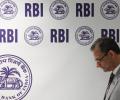
The Reserve Bank of India on Wednesday raised its policy repo rate by 25 basis points to 5.50 per cent, beginning a rate-hike cycle as rising inflation risks, elevated global yields and resilient domestic growth strengthened the case for tighter monetary policy. The decision by the Monetary Policy Committee marks a shift from its August policy, when it kept the repo rate unchanged at 5.25 per cent and retained a neutral stance while seeking greater clarity on the inflation outlook and growth-inflation balance.

Jio Platforms' initial public offering has shattered global records by receiving over one crore applications, underscoring immense investor confidence in the company's ambitious plans for technology, AI, and cloud services, with the IPO subscribed almost seven times overall.

A savings or current account with no customer-induced transaction for more than 24 months is classified as inoperative.

A report by IIT Bombay suggests that the proposed Merchant Discount Rate (MDR) framework for Unified Payments Interface (UPI) transactions needs rationalisation before implementation to safeguard public trust in the digital payments system, highlighting that UPI's long-term economic benefits outweigh potential incremental income from merchant fees.

Hyderabad Police Commissioner V C Sajjanar warned that replying 'NO' to unsolicited WhatsApp messages regarding unauthorised bank debits could allow fraudsters to steal your money without needing an OTP or a link.

Despite near gender parity in basic bank account ownership, women in India remain significantly underrepresented in the growing platform economy due to gaps in digital financial capability and access to credit, according to a joint report by the International Labour Organization and National Council of Applied Economic Research.

The Telecom Regulatory Authority of India (Trai) has expanded the 1600-number series to include utilities, courier, and logistics companies, introducing the new 1601 series to help consumers identify legitimate calls and prevent widespread fraud and impersonation.

The Allahabad High Court has ruled that investigating agencies cannot impose a blanket debit freeze on a person's bank account during cybercrime investigations. The court stated that restraint must be proportionate to the suspected proceeds of crime, directing banks to de-freeze accounts beyond the disputed amount. This ruling aims to protect innocent account holders from complete financial deprivation due to minor disputed transactions.

The goal is to ensure that your bank works for you, providing liquidity and convenience without charging you for the privilege of holding your own money.

Listing, according to Noel Tata, will fundamentally change how the company and the group have been working over the past 150 years.

'Resolution plan with this much haircut is totally unviable.'

Indian IT services firms are expected to report a soft Q1 FY27 performance due to a challenging macro environment, the impact of AI, and geopolitical uncertainties, leading to reduced discretionary spending and slower decision-making cycles, according to Motilal Oswal Financial Services.

The merged InsuranceDekho-RenewBuy entity aims to significantly expand its distribution network across India, offering insurance, mutual funds, and loans, with a strong focus on 'Bharat' (rural India), according to CEO Ankit Agarwal.
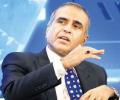
'The Rs 35,000 crore of capex every year, I don't get to sign 35 paise out of this.'

Large office leases in Mumbai and Delhi-NCR are commanding premium rentals in key micro-locations, driven by a scarcity of quality Grade-A space and sustained occupier demand, according to real estate consultants.

'India is vulnerable to the West Asia crisis in three ways: Energy costs, the business Indian companies conduct in the region, and remittances from the Indian diaspora.'

Aditya Birla Capital has entered the gold loan business, aiming to establish 1,000 branches within three years, capitalising on the strong structural growth and surge in demand for gold-backed credit in India.

Financial Services Secretary M Nagaraju has urged banks to adopt the MuleHunter AI tool developed by RBI to identify and prevent mule accounts used in cyber financial frauds. The meeting also discussed 'Operation Octopus' by Hyderabad Police and emphasised coordinated efforts and intelligence sharing.

The Shapoorji Pallonji (SP) Group, the second-largest shareholder in Tata Sons, has publicly endorsed a listing of the Tata Group's holding company, aligning with the board's push for greater transparency and public accountability despite opposition from the Tata Trusts.

Jio Platforms Ltd's (JPL) public offer, valued at Rs 30,213 crore, was fully subscribed within 100 minutes of opening, making it the fastest-ever subscribed IPO in India, driven by strong institutional demand.

Indian benchmark indices Sensex and Nifty experienced declines in early trade, influenced by the Reserve Bank of India's (RBI) recent repo rate hike and its signal for continued monetary tightening, coupled with rising crude oil prices and foreign fund outflows. Track Sensex, Nifty on October 8.

The Enforcement Directorate (ED) conducted searches in Jaisalmer, Rajasthan, investigating the alleged misuse of Rs 5.10 crore in foreign donations from a non-FCRA registered Belgian entity for proselytisation activities. Two local residents are accused of receiving funds without proper registration, disguising them as educational or cultural services, and using them to influence vulnerable communities.

The Enforcement Directorate (ED) has provisionally attached assets worth approximately Rs 34.51 crore in connection with an alleged financial fraud involving the United Services Club in south Mumbai.

The National Payments Corporation of India (NPCI) stated that the Merchant Discount Rate (MDR) "is distributed only amongst the UPI ecosystem, to further invest into infrastructure resilience, innovation, cybersecurity (protecting the UPI infrastructure with banks and non-banks) and customer service."

Wipro's net profit in the first quarter saw minimal growth, rising less than one per cent to 3,352 crore, while revenue increased by 10.6 per cent to 24,480 crore. The IT services segment, a key metric, grew by only one per cent year-on-year, falling short of analyst estimates amidst a challenging demand environment and longer decision cycles from clients.

Investors opening new brokerage accounts must choose a broker suited to their style.

Do not share OTPs, PINs, authentication codes, card numbers, card verification values (CVVs), KYC details, security answers, Internet-banking passwords or Aadhaar-based authentication credentials through SMS, e-mail or phone calls.

Andhra Pradesh and Punjab National Bank (PNB) have signed an MoU to establish the PNB Quantum Finance Hub at Amaravati Quantum Valley. This initiative aims to foster innovation and adopt next-generation technologies like AI and Quantum Computing in the banking sector, focusing on cybersecurity, fraud detection, and customer experience.

Lenders and shareholders of Reliance Industries Ltd (RIL) will meet on May 2 to demerge the firm's financial services business. This is expected to create a big player in segments including the NBFC (non-banking financial company) space with net worth of Rs 25,851 crore as of March 2022. According to the plan, RIL shareholders will get a share in the demerged entity for each one held in the company.

The benchmark Sensex plummeted 813 points to a three-month low, with the Nifty settling below 23,450, as escalating tensions in West Asia drove crude oil prices above USD 100 per barrel, leading to widespread selling in IT, FMCG, financial services, and oil & gas shares.


AU Small Finance Bank has launched its first AI-native loan origination system, built on the Broccoli platform, in partnership with Amazon Web Services. This deployment marks a significant step towards becoming a fully AI-native bank, replacing traditional systems with a hyper-personalised sales and servicing platform.
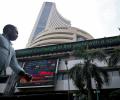
Indian equity benchmarks, the Sensex and Nifty, opened higher on Friday, driven by a strong rally in IT stocks, despite a significant overnight decline in US technology shares and broader Asian markets. Experts anticipate further market support from falling US bond yields, a strengthening rupee, and a substantial liquidity inflow following the Jio Platforms IPO allotment. Track

Two men, including alleged mastermind Adeeb Khan, have been arrested in Delhi for cheating a person of Rs 15 lakh by posing as Direct Selling Agents (DSAs) of private banks and offering low-interest loans. Police recovered Rs 6.95 lakh in cash, and efforts are underway to apprehend a third absconding associate and trace the full money trail.
UPI transactions saw a 27% volume increase and 20% value increase in the first half of the current fiscal year. Despite a slight moderation in September, the digital payment system is set to implement a 0.4% merchant discount rate on transactions over Rs 2,000, aiming for a sustainable revenue model. Small merchants and person-to-person payments remain exempt, and UPI's global presence continues to expand.

India's economy is projected to lose momentum in the second half of fiscal 2026-27, with tighter financial conditions, elevated energy prices, and broadening inflation pressures posing significant risks, according to DBS Bank economist Radhika Rao.

Digital services major Jio Platforms is anticipated to list on the stock exchange by the end of October, with an estimated enterprise valuation of USD 143-146 billion, making it India's largest public offer at around USD 3.8 billion.

The government is introducing a 0.4% Merchant Discount Rate (MDR) on UPI person-to-merchant payments above Rs 2,000, effective October 15. This move ends the zero-MDR regime, aiming to fund UPI infrastructure and sustainability, as the previous government subsidy was insufficient to cover operational costs. Payments between individuals and most everyday merchant transactions will remain free.
